Improve combustion. Manage deposits. Recover boiler performance.
Agnisol is a range of fuel-specific fireside additives for coal, bagasse, wood and biomass-fired boilers. The products are designed to support carbon burnout, reduce hard slag and clinker, help keep heat-transfer surfaces cleaner and improve operating consistency.
Four products for four main solid-fuel groups.
Each product page now includes fuel-specific problems, applications, advantages, dosing methods and performance-monitoring parameters.
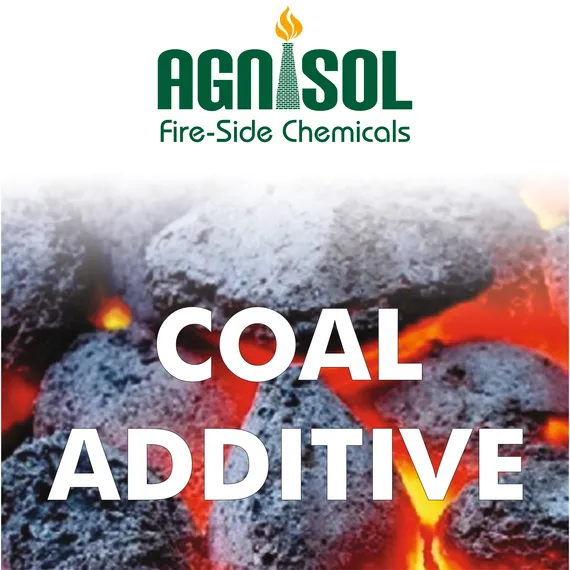 AGN6100 · 25 Kg
Coal Fuel Additive
A free-flowing fireside additive formulated for coal-fired boilers where high ash, variable fuel quality, incomplete combustion, clinker and furnace deposits can affect performance.
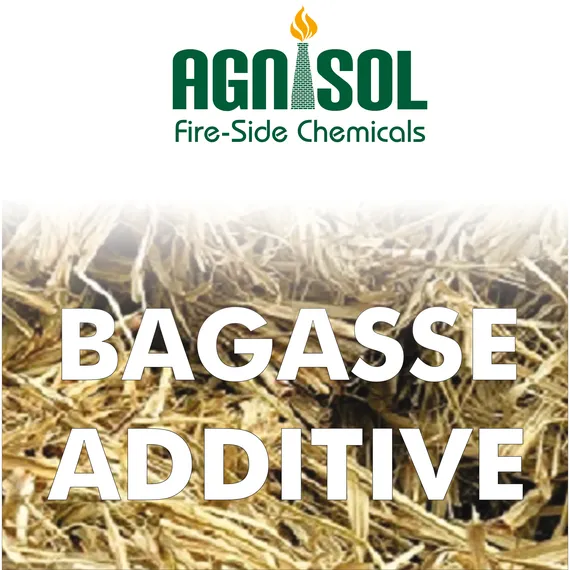 AGN6200 · 25 Kg
Bagasse Fuel Additive
A fuel-specific fireside treatment for bagasse-fired boilers, designed to support combustion consistency and help manage ash, soot, deposits and variable moisture conditions.
 AGN6300 · 25 Kg
Wood Fuel Additive
A fireside additive for boilers and furnaces firing wood chips, sawdust, bark, pellets, briquettes and mixed wood residues.
 AGN6400 · 25 Kg
Biomass Fuel Additive
A multipurpose fireside treatment for biomass pellets, briquettes and mixed agricultural residues used in industrial boilers.
Fuel cost is only one part of boiler efficiency.
A boiler can lose performance through incomplete combustion, carbon-rich ash, slag, clinker, soot, fouling and corrosion-related deposits.
Recover unburnt fuel value
Unburnt carbon in ash, soot and carbon monoxide indicate that part of the fuel has not delivered its full heat. Combustion-support treatment aims to improve burnout.
Keep deposits manageable
Slag and clinker can become hard and strongly bonded. Deposit conditioning aims to make ash less adherent, more friable and easier to remove.
Protect heat transfer
Fouled tubes and furnace walls reduce useful heat absorption and can raise stack temperature. Cleaner surfaces support better heat recovery.
Reduce cleaning burden
Softer deposits and slower accumulation can reduce manual cleaning effort, soot-blowing demand and maintenance shutdowns.
Improve boiler availability
Longer periods between cleaning interventions allow the boiler to remain available for production and steam demand.
Support measurable fuel economy
When combustion and heat transfer improve, fuel consumption per tonne of steam may improve. The result must be confirmed from plant records.
What a fireside programme is designed to address.
- Incomplete combustion and high carbon monoxide
- Unburnt carbon in bottom ash or fly ash
- Visible smoke and soot formation
- Hard clinker restricting the fuel bed
- Slag on furnace walls and radiant surfaces
- Fouling of tube banks and economisers
- High stack temperature and poor heat recovery
- Acidic deposits and cold-end corrosion risk
- Frequent soot blowing and manual cleaning
- Reduced steam output for the same fuel input
- High pressure drop across gas passages
- Short operating cycles between shutdowns
Used across steam and process-heating industries.
Sugar, Distillery & Cogeneration
Bagasse-fired boilers in sugar factories and distilleries operate under seasonal loads, changing moisture and fuel-fibre conditions. Routine fireside treatment can support stable combustion, reduce carryover and deposit formation, and help maintain steam availability during crushing season.
AGN6200 Bagasse Fuel AdditiveAPPLICATION GUIDEPlywood, Paper & Wood Processing
Wood-processing plants often generate bark, sawdust, chips, shavings and rejects that are used as boiler fuel. These fuels vary in moisture, particle size and resin or bark content, making smoke, soot, ash and deposit control important.
AGN6300 Wood Fuel AdditiveAPPLICATION GUIDEFood, Pharmaceutical & Textile Steam
Reliable steam is essential for heating, sterilisation, drying, washing, dyeing and process control. Fuel deposits and incomplete combustion can reduce steam output and increase operating cost, so routine boiler monitoring is important.
AGN6100 or AGN6400 according to fuelAPPLICATION GUIDEAgro & Biomass Boiler Applications
Biomass boilers may fire pellets, briquettes, rice husk and mixed crop residues. Variable alkali, silica, ash and moisture can promote sintering and fouling, requiring fuel-specific monitoring and treatment.
AGN6400 Biomass Fuel AdditiveAPPLICATION GUIDEGeneral Industrial Boilers
Industrial boilers provide steam and heat across many sectors. Agnisol programmes can be applied where coal, wood or biomass firing creates smoke, carbon-rich ash, clinker, slag or frequent cleaning needs.
Select AGN6100, AGN6300 or AGN6400 by fuelAPPLICATION GUIDEBoiler Performance Audit & Optimisation
A fireside-additive programme should begin with a baseline and defined measurement plan. Tracking fuel-to-steam ratio, ash carbon, stack temperature, O₂, CO and deposit condition allows the plant to determine whether treatment is delivering value.
Technical programme for all Agnisol productsOperate, measure, compare and optimise.
Establish a baseline
Record fuel usage, steam output, stack temperature, ash carbon, O₂, CO, deposits and cleaning frequency.
Dose consistently
Add the selected Agnisol product uniformly with the fuel and maintain comparable operating conditions.
Optimise using data
Review two to four weeks of trends and adjust the dosage with technical guidance.
| Parameter | Why it matters | What to look for |
|---|---|---|
| Fuel-to-steam ratio | Direct measure of useful fuel economy | Lower fuel for comparable steam and load |
| Unburnt carbon in ash | Shows combustion loss | Reduced values |
| Stack temperature | Indicates heat leaving with flue gas | Stable or reduced after cleaning improves |
| Slag and clinker | Affects air flow, heat transfer and maintenance | Softer, reduced and easier to remove |
| Cleaning interval | Measures operational availability | Longer time between shutdowns |
Need a fuel-specific recommendation?
Share your boiler capacity, fuel type, daily consumption and current operating problems.